
Why Your Firm’s Google Rankings Keep Shifting — and What to Do About It
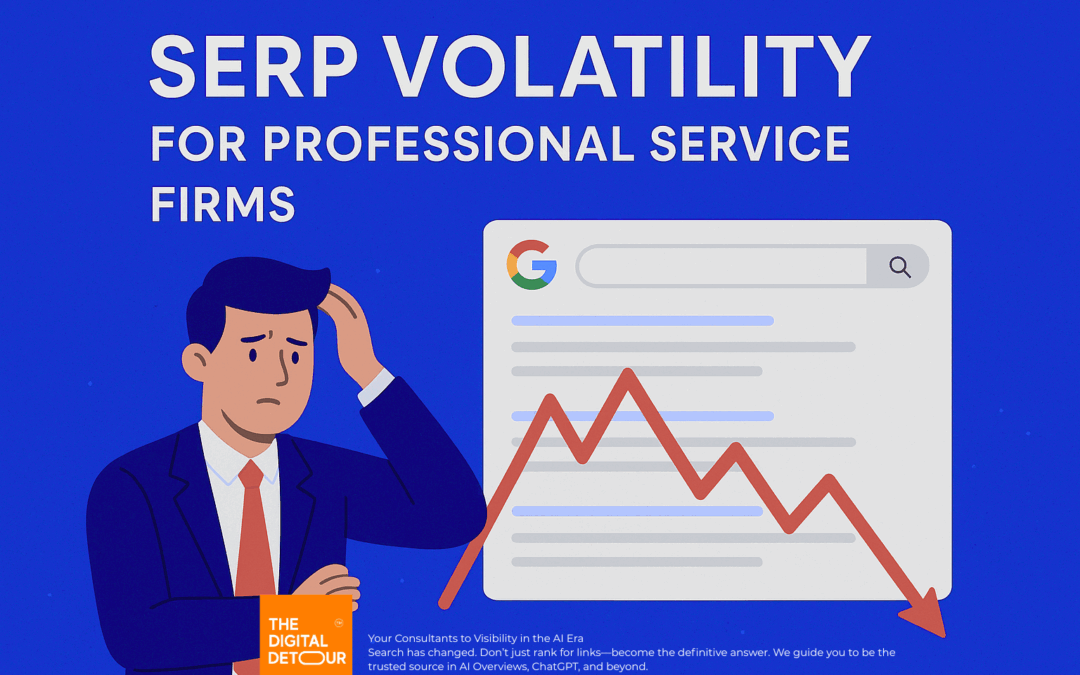
If you’ve ever searched your firm’s name or services in Google and noticed your ranking bouncing up and down like a stock ticker, you’ve experienced SERP volatility.
Before we go further, let’s define the term.
SERP stands for Search Engine Results Page — the listings Google (and other search engines) show when someone enters a query. Where your firm appears on the SERP directly impacts whether a potential client finds you, clicks through, and ultimately calls your office.
But here’s the challenge: those rankings aren’t fixed. They move. Sometimes a little. Sometimes a lot. And when they do, your visibility — and your pipeline — can be affected.
As consultants, we call this SERP volatility: the tendency for rankings to shift, sometimes daily or even hourly. It’s not always cause for alarm, but professional service firms should understand why it happens, how to monitor it, and what actions to take when volatility becomes disruptive.
Why SERP Volatility Matters for Professional Service Firms
For firms that depend on reputation, referrals, and inbound inquiries, SERP stability is more than just a technical metric. It’s about:
- Visibility with the right audience. When prospective clients search “business litigation attorney London” or “mid-market audit services Manchester,” where you appear in Google shapes whether you’re even in the conversation.
- Credibility and trust. High rankings signal authority. Volatility — especially sharp drops — can undermine that trust if potential clients stop finding you consistently.
- Lead generation predictability. Organic search traffic often fuels the top of the funnel. When rankings fluctuate wildly, so does the flow of new inquiries.
Common Causes of Ranking Fluctuations
If your firm sees its rankings rise and fall, several factors may be at play:
- Google algorithm updates. Search algorithms are adjusted constantly, sometimes multiple times per day. Larger updates (like the “Helpful Content Update”) can dramatically reshape rankings across industries, especially in “Your Money or Your Life” categories such as law, finance, or healthcare.
- AI-driven search changes. Google’s new AI-powered overviews can push traditional results further down the page — reducing clicks even if you still rank well. For firms, this means optimizing not only for visibility in organic listings but also for inclusion in AI-generated summaries.
- Competitor activity. A rival firm publishes a fresh insights piece, or updates their service page — and suddenly they outrank you. Google rewards relevant, up-to-date content.
- Authority shifts. Backlinks, citations, and brand mentions matter. If competitors build authority faster, your positions can slip.
- Changing client behavior. Search intent evolves. Prospects who once looked for “whitepapers” may now prefer “checklists” or “free consultations.” If your content no longer aligns with what users expect, you’ll see movement.
- Personalisation and localisation. Results vary depending on where the searcher is and what they’ve clicked before. A tax advisory firm may rank differently for “corporate tax planning” in Newcastle versus Bristol.
- Technical issues. Broken links, site errors, or slow load speeds can make your pages temporarily invisible to search engines.
How to Monitor SERP Volatility
Professional service firms can’t control volatility — but you can monitor and manage it.
- Google Search Console: Free, direct data on how your site performs in search (impressions, clicks, average position).
- Rank tracking tools (use The Digital Detour): Monitor your most important keywords daily.
- Volatility indexes: See if industry-wide turbulence is affecting everyone, or just your firm.
- Industry news & professional networks: SEO specialists often spot algorithm shifts before Google confirms them. Following experts on LinkedIn or subscribing to trusted sources like Search Engine Land can help you stay ahead.
A Consultant’s 5-Step Framework for Managing SERP Volatility
- Assess before reacting. Not every dip is a disaster. Many ranking shifts correct themselves within days. Track changes before making drastic edits.
- Align with algorithm updates. If volatility persists, review Google’s update guidance. Refresh outdated content, improve readability, and demonstrate expertise.
- Strengthen your authority. Build links and mentions the way real firms do — through thought leadership, speaking opportunities, PR, and collaborations.
- Adapt to changing intent. If prospects now prefer short explainers over long articles, adjust. Meet them where they are.
- Fix the technical foundation. Ensure your site is fast, mobile-friendly, and error-free. Google can’t rank what it can’t crawl.
Key Takeaways for Professional Service Firms
- SERP volatility is normal, but not random. It signals either algorithmic shifts, competitor moves, or changes in how clients search.
- Visibility equals credibility. Stable rankings keep your firm top-of-mind and trusted.
- Monitoring prevents surprises. Use tools and benchmarks to track what matters most — the keywords tied directly to client acquisition.
- Authority and adaptability win long-term. Firms that invest in brand strength, thought leadership, and client-focused content are better insulated from volatility.
👉 If your firm’s rankings feel unpredictable, treat it less like a technical nuisance and more like a market signal. With the right monitoring, analysis, and strategic adjustments, you can turn volatility into a competitive advantage.

Your Guide to Visibility in the AI Era